

Forgive me, Father...
For I have sinned.

As a Catholic, I believe the Sacrament of Confession is part of the process of absolution. But do we need a Priest to act as a middle-man to God? Confession was not always a private ritual.
Before the fourth century confession and penitential discipline were a public affair "since all sin is sin not only against God but against our neighbor, against the community” The Bible instructs us to "confess your sins to one another and pray for one another" at gatherings, and to be forgiving people.
In the Gospel of John, Jesus says to the Apostles, after being raised from the dead, "Receive the Holy Spirit. Whose sins you forgive, they are forgiven; and whose sins you shall retain, they are retained." By the early Middle Ages, formalized at the Fourth Lateran Council in 1215, and weaponized thoroughly by the Council of Trent in 1545, confession was slipped behind a screen. Confession became mandatory, with a promise of privacy.
A priest and a soul locked in a box, as if it was a tiny, moral courtroom.
Was the Confession booth designed as an information gathering system cloaked as a portal to forgiveness?
The Counter-Reformation Church was obsessed with orthodoxy. Heresy was to be shadow-banned, de-monetized and severely punished. Ostensibly, the Seal of Confession was inviolable. But was it in reality?
Historians like Adriano Prosperi describe early modern confession as a parallel judicial system. Priests were trained not merely to absolve sins but to extract narratives, relationships, rumors, intellectual curiosities, private doubts. The line between sin and crime blurred. Heresy, sexuality, political dissent all fell under the same touchy-feely realm of “spiritual concern.”
A confessor never had to denounce you. He merely had to withhold absolution. Or suggest that your soul would feel lighter if you spoke to the proper authorities.
Even better, confession didn’t just capture guilt. It produced implication. They don’t call it The Inquistion for no reason. Did you know the word “propaganda” originates from the Catholic Church‘sCongregation for the Propagation of the Faith?, established by Pope Gregory XVin 1622 to spread the Catholic faith.
The Jesuits, were the Counter-Reformation’s elite listeners. Masters of psychological acuity. Confessors to nobles, magistrates, military men, artists, intellectuals.
Was this the seminal system upon which the dark intelligence apparatus we know today was built? Is there a direct lineage that goes back to Trent? The dark alchemy was this: confession created records. Power lived in memory, inference, selective silence. The penitent never knew what the priest knew, or thought he knew. This dynamic lead to self-censorship. Preemptive obedience. Consensual paranoia.
Norman Mailer referred to the CIA as “Catholics In Action” What did he mean by that exactly?
Michel Foucault calls confession “a ritual of power that produces truth.”
Not discovers it. Produces it.
By Trent, Christianity had shifted from social reconciliation to moral surveillance. The Church moved closer to the nervous system of society, one whispered admission at a time.
Is contemporary social media a sort of digital confessional booth?
We volunteer our thoughts, biases, angers, and heresies to unseen listeners behind screens, with only the vaguest sense of how that information will be stored, inferred, or weaponized. People’s ability to share their most private sins either consciously or not has increased dramatically in my lifetime. But it’s not just the ability to expose the world to their private thoughts that has shifted but the idea of what should be private in the first place. Privacy is a shining artifact from the past. And the future does not look bright for anyone who values it.
We confess constantly.
We pray for absolution in “likes”.
We fear excommunication by algorithm.
Forgive me X, for I have sinned.
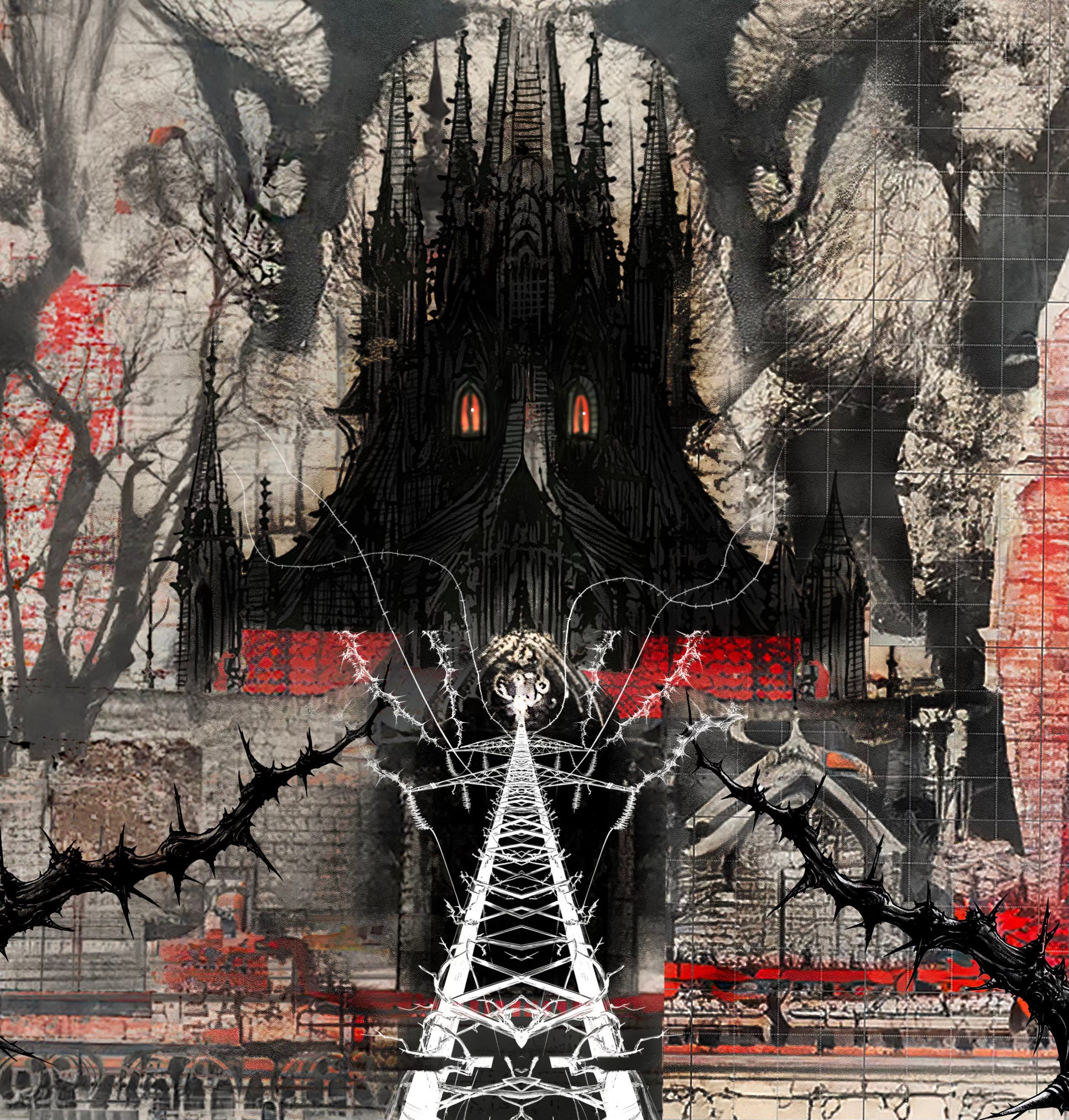
Spiritual privacy is sacred and is found in solitude, discretion, and a protected inner world in which reflection, discernment, and a genuine connection to the Divine may be nurtured.
Please keep this to yourself; I thought this was a very insightful article.