PR giant Hill & Knowlton was subsidized by the Kuwaiti royal family, H&K dedicated 119 executives in 12 offices across the country to the job of drumming up support within the United States for the ’91 Iraq War. It was an all-out blitz: distributing tens of thousands of “Free Kuwait” T-shirts and bumper stickers at colleges and setting up observances such as National Kuwait Day and National Student Information Day. H&K also mailed 200,000 copies of a book titled The Rape of Kuwait to American troops stationed in the Middle East. The firm also massaged reporters, arranging interviews with handpicked Kuwaiti emissaries and dispatching footage of burning wells and oil-slicked birds washed ashore.
But nothing quite compared to H&K’s now infamous “baby atrocities” campaign. After convening a number of focus groups to try to figure out which buttons to press to make the public respond, H&K determined that presentations involving the mistreatment of infants, a tactic drawn straight from W.R. Hearst’s playbook of the Spanish-American War, got the best reaction. So on October 10, 1990, the Congressional Human Rights Caucus held a hearing on Capitol Hill at which H&K, in coordination with California Democrat Tom Lantos and Illinois Republican John Porter, introduced a 15-year-old Kuwaiti girl named Nayirah. (Purportedly to safeguard against Iraqi reprisals, Nayirah’s full name was not disclosed.) Weeping and shaking, the girl described a horrifying scene in Kuwait City. “I volunteered at the al-Addan hospital,” she testified. “While I was there I saw the Iraqi soldiers coming into the hospital with guns and going into the room where 15 babies were in incubators. They took the babies out of the incubators, took the incubators, and left the babies on the cold floor to die.” Allegedly, 312 infants were removed.
The tale got wide circulation, even winding up on the floor of the United Nations Security Council. Before Congress gave the green light to go to war, seven of the main pro-war senators brought up the baby-incubator allegations as a major component of their argument for passing the resolution to unleash the bombers. Ultimately, the motion for war passed by a narrow five-vote margin.
Only later was it discovered that the testimony was untrue. H&K had failed to reveal that Nayirah was not only a member of the Kuwaiti royal family, but also that her father, Saud Nasir al-Sabah, was Kuwait’s ambassador to the U.S. H&K had prepped Nayirah in her presentation, according to Harper’s publisher John R. MacArthur’s book Second Front: Censorship and Propaganda in the Gulf War. Of the seven other witnesses who stepped up to the podium that day, five had been prepped by H&K and had used false names. When human rights organizations investigated later, they could not find that Nayirah had any connection to the hospital. Amnesty International, among those originally duped, eventually issued an embarrassing retraction.
When asked if it acknowledges the incubator story as a deception, H&K’s media liaison, Suzanne Laurita, only responded, “The company has nothing to say on this matter.” Pushed further on whether such deception was considered part of the public relations industry, she reiterated, “Please know again that this falls into the realm that the agency has no wish to confirm, deny, comment on.”
Written by Ian Urbina at the Middle East Research and Information Project in Washington, D.C. November 12, 2002.
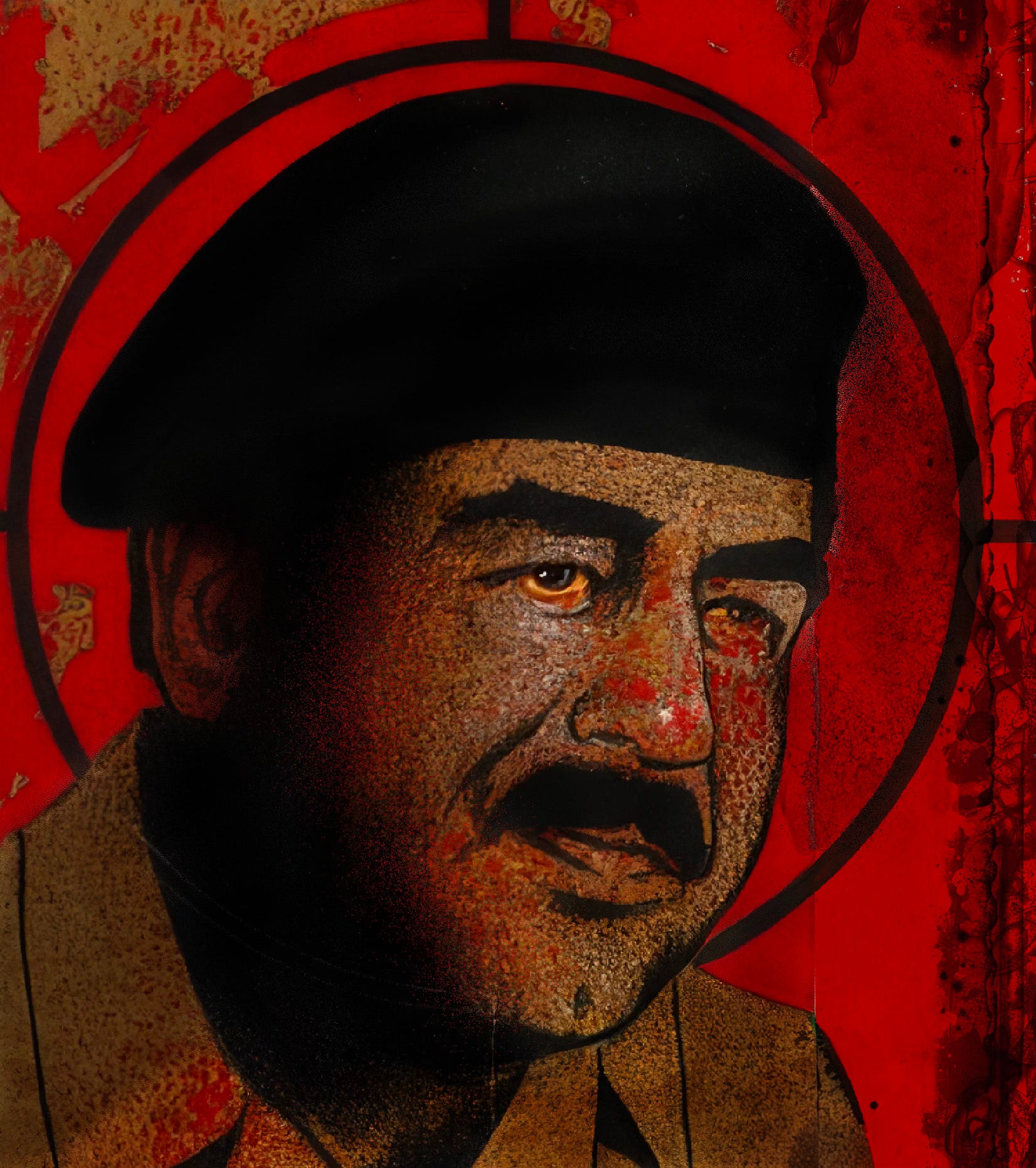
I’m not suggesting that old Saddam was a sweetheart, but seems there were enough true stories to smear the guy, no?
Why do people still believe a word of official narratives?
I’ll die baffled.
Non-Essential Substack is a reader-supported publication. To receive new posts and support my work, consider becoming a free or paid subscriber.



Remember Belgium.
https://oshermaps.org/exhibitions/great-war/section-2
Corbett concurs at the end of this video which is also a primer on propaganda: https://old.bitchute.com/video/OF7cr0wKqrAU [4:56mins]